Afghanistan Hidden Gems: Places Most Tourists Never See
Kabul, Bamiyan, and Band-e-Amir fill most itineraries — deservedly. But Afghanistan holds far more. Here are six places most visitors never reach, and why they're worth the extra effort.
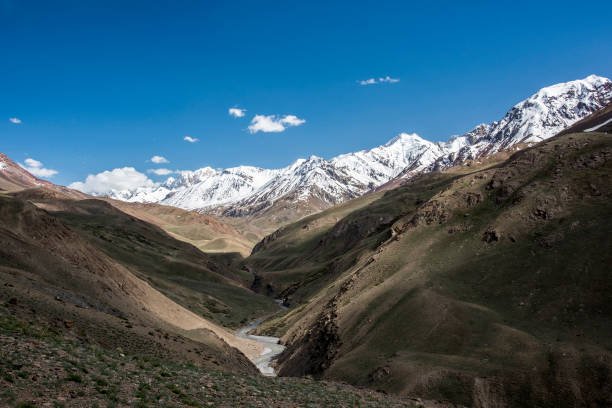
Most Afghanistan itineraries follow a well-worn loop: Kabul's museums and bazaars, the Buddha niches of Bamiyan, the turquoise lakes of Band-e-Amir, perhaps the Blue Mosque of Mazar-i-Sharif or the minarets of Herat. Those places earn their reputation. But Afghanistan is a big country with layers of history most visitors never touch — Ghaznavid towers, Silk Road ruins, alpine corridors that reach all the way to China.
A word of honesty before the list: some of these places are genuinely hard to reach. Road conditions, seasons, and permissions all matter, and a few require expedition-level planning. We'll tell you plainly which is which. That difficulty is also precisely why they remain so rewarding — you will often be the only foreign visitor there.
1. Panjshir Valley: Five Lions and a River
Just a few hours' drive northeast of Kabul, the Panjshir Valley is the most accessible entry on this list — and still, remarkably few travellers make the trip. The name means "Five Lions," and the valley lives up to it: a green ribbon of orchards and villages squeezed between steep Hindu Kush walls, with the Panjshir River running fast and cold through the middle.
Panjshir is also one of Afghanistan's most storied regions. The hilltop mausoleum of Ahmad Shah Massoud, the commander who defended this valley for decades, overlooks the river and draws Afghan visitors from across the country. The province is famous for its emeralds too — Panjshir stones are among the finest in the world. As a day trip from Kabul, this is the easiest way to see rural, mountainous Afghanistan without committing to a long overland journey.
2. The Minaret of Jam: A Skyscraper from the 12th Century
Deep in the mountains of Ghor Province, at a remote river confluence reachable only by rough mountain roads, stands one of the most astonishing buildings in Asia: the Minaret of Jam. Roughly 65 metres of intricately patterned baked brick, raised in the late 12th century by the Ghurid dynasty, covered in geometric ornament and bands of Kufic inscription, with traces of turquoise glazed tile still clinging to its upper reaches.
In 2002 it became Afghanistan's first UNESCO World Heritage Site. What makes Jam extraordinary is not just the tower itself but its setting — there is no city around it, only mountains and the river junction. The empire that built it vanished, and the minaret simply remained. Getting there is a serious undertaking: long days of overland driving on unpaved roads, best attempted in summer. This is the definition of an expedition destination, and travellers who make it describe it as the highlight of their lives.
Honest Note
Jam, Nuristan, and the Wakhan are remote-region trips that depend on season, road conditions, and current local permissions. We assess each route before we commit to it — if we can't do it safely in a given month, we'll tell you and propose alternatives.
3. Ghazni: Towers of a Forgotten Empire
A thousand years ago, Ghazni was one of the most powerful cities on earth — capital of the Ghaznavid Empire, whose rulers commanded territory from Iran to northern India and filled their court with poets and scholars. Today most travellers pass it by on the Kabul–Kandahar highway without stopping. Their loss.
Two magnificent early-12th-century minarets — the so-called Towers of Victory, built under Mas'ud III and Bahram Shah — still rise from the plain outside town, their star-shaped shafts covered in elaborate terracotta and brickwork. Above the old city looms the Citadel of Ghazni, a massive fortress mound that has watched over the region for centuries. Ghazni rewards travellers who care about history: this is a place where you stand in the ruins of an empire most people have never heard of.
4. Balkh: The Mother of Cities
Half an hour's drive from Mazar-i-Sharif lies Balkh, known in Arabic tradition as Umm al-Belad — the Mother of Cities. This was ancient Bactra, one of the oldest continuously inhabited settlements in the world, a Silk Road hub where Zoroastrian, Buddhist, and Islamic civilisations layered themselves on top of one another for millennia. The great poet Rumi was born here in the early 13th century, before his family fled west ahead of the Mongol invasion.
Today you can walk the enormous crumbling earthen walls of the Bala Hissar, visit the beautifully tiled 15th-century shrine of Khwaja Abu Nasr Parsa, and see the remains of the Noh Gonbad ("Nine Domes") mosque — one of the earliest Islamic buildings in Afghanistan, its carved stucco still astonishing after more than a thousand years. Because it pairs so easily with Mazar-i-Sharif, Balkh is the lowest-effort, highest-reward hidden gem in the country.
5. Nuristan: The Land of Light
Nuristan, in Afghanistan's mountainous east, is unlike anywhere else in the country. Its steep valleys are covered in cedar and holly-oak forest — a genuine surprise in a land known for deserts and bare rock. Its people speak Nuristani languages found nowhere else on earth, build multi-storey timber houses stacked against the hillsides, and preserved a unique pre-Islamic culture until the late 19th century, when the region — then called Kafiristan — converted to Islam and took its present name, "Land of Light."
We'll be straightforward: Nuristan is one of the most logistically demanding regions we cover. Roads are minimal, infrastructure is basic, and any visit has to be arranged carefully with local contacts and current security assessments. But for travellers fascinated by remote cultures and untouched mountain landscapes, there is nothing else like it.
6. The Wakhan Corridor: The Roof of the World
In the far northeast, a narrow finger of Afghan territory stretches roughly 350 kilometres between Tajikistan and Pakistan until it touches China. This is the Wakhan Corridor — high Pamir plateau country, much of it above 4,000 metres, home to Wakhi farming villages and Kyrgyz herders who live much as their ancestors did. Marco Polo sheep, the largest wild sheep on earth, roam the upper valleys; snow leopards leave tracks in the passes.
The Wakhan has long been considered one of the most peaceful corners of Afghanistan, isolated from the country's conflicts by geography itself. It is also one of the world's great trekking regions — vast, silent, and almost entirely without tourists. Reaching it takes time, acclimatisation, and proper planning, and the season is short. If you want the full picture, we've written a dedicated Wakhan Corridor guide.
Practical Information
- Easiest to hardest: Balkh and Panjshir are straightforward add-ons; Ghazni needs a planned stop; Jam, Nuristan, and the Wakhan are expedition territory
- Best season: May–October for the mountain regions; Balkh and Ghazni are reachable most of the year
- How to combine: Balkh pairs with Mazar-i-Sharif; Panjshir works as a Kabul day trip; the rest deserve dedicated itineraries
- Go with support: All of these require current, on-the-ground knowledge of roads and permissions — this is not solo-backpacker terrain
Want to go beyond the usual route? Tell us which of these places is calling you and we'll build the itinerary around it.
Start Planning Your TripRelated Reading
- All Destinations — Every region we cover, in detail
- Wakhan Corridor Guide — Trekking the roof of the world
- Is Afghanistan Safe? — Safety guide for travellers